Blog 3: Chapter 3

Blog three- Date 1/29/2019

What the term means: Cognition: It is the way of thinking, remembering, learning, daydreaming, decision making, seeing, writing, and talking. So basically, it is the things we do in our daily life.  

Reflection on the Topic

1. Cognition has been described in two general modes which are experiential and reflective cognition. They are described as fast and slow thinking by Kahneman. Experiential cognition is described as fast things such as reading a book or driving a car. Reflective cognition involves mental effort or attention. Both of these cognitions are important in our daily life.The former is a state of mind in which we perceive, act, and react to events around us intuitively and effortlessly. Reflective cognition and slow thinking involve mental effort, attention, judgement, and decision making” (Preece, Rogers & Sharp, 2015, p. 66).  

2. “Cognition is the mental steps you use acquire, process, and understand information. It involves absorbing information, processing it, and then applying it to the appropriate situations” (Cognition and Learning).

3. An example of cognition is could be learning a new language
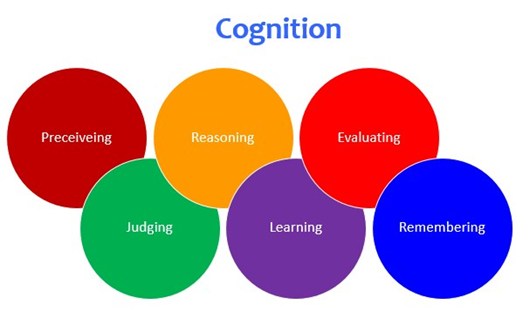
Description of cognition
My thought: “Cognition is our daily life activity which involves slow process and fast process”(Firdous Ghani, 2019) .
References: 1. Preece, Rogers & Sharp, (2015). Interaction and Design: Beyond human-computer interaction. West Sussex, United Kingdom: John Wiley & Sons, Ltd. 2. Cognition and Learning. (n.d.). Retrieved from http://thepeakperformancecenter.com/educational-learning/learning/process/processing-information/cognition-and-learning/

Blog 2: Chapter 2

What the terms means: Instructing, Conversing, Manipulation and Exploring Instructing: In interaction, instructing is where users provide direction to system. Conversing: In interaction, it is where the user will have a dialog with a system. Manipulating: It is where the user connects with the object in virtual or physical space by holding them. Exploring: It is where the user moves through the physical space.

Reflection on the topic: 1. There are four types of interaction which are listed above. Instructing tells the user what to do, it gives the instructions to the system such as it tells to print the file etc. Conversing is what it sounds like, it acts as talking to us or having conversation with us such as search engines. Manipulating involves “objects and capitalizes on users’ knowledge of how they do so in the physical world”; example could be that “digital objects can be manipulated by moving, selecting, opening, and closing” (Preece, Rogers & Sharp, 2015, p. 52). Exploring deals with physical environment or virtual, the purpose of exploring is to enable people to have new ideas and explore with environment. 2. “Interaction types (e.g., conversing, instructing) provide a way of thinking about how best to support the activities users will be doing when using a product or service”(Interaction). 3. Couldn’t find an image,graphic, or video element based on the 4 types of interactions I mentioned above except for the pictures that has the definitions of them which is not needed. Example of instructing could be gesturing, conversing could be interface. Manipulating example could be opening or holding and exploring example could be smart rooms.

My Thought “The four interactions have different commands and they all have different jobs to do for the users. They all are important for a process to the system”(Firdous Ghani,2019)

Reference List: 1. Preece, Rogers & Sharp, (2015). Interaction and Design: Beyond human-computer interaction. West Sussex, United Kingdom: John Wiley & Sons, Ltd. 2. Interaction Types. (n.d.). Retrieved from https://studylib.net/doc/5453454/interaction-types

Blog 1: Chapter 1

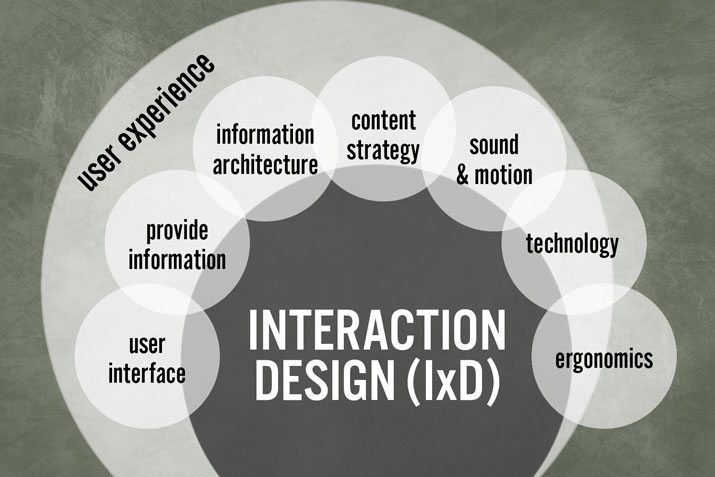
What the term means: Interaction Design Interaction Design is the term used for creating user experience that increases the way people work or communicate with others. It means “designing interactive products to support the way people communicate and interact in their everyday and working lives” ( Preece, Rogers & Sharp, 2015, p. 8). It answers “why or show of our daily interactions using computers” in the term of Thackara view.

Reflection on the Topic: 1. Many terms have been used to point out different aspects of what is being designed which includes user interface, software design, and experience design. “Interaction design is increasingly being accepted as the umbrella, covering all of these aspects” (Preece, Rogers & Sharp, 2015, p. 8). 2. “The 5 dimensions of interaction design is a useful model to understand what interaction design involves. Gillian Crampton Smith, an interaction design academic, first introduced the concept of four dimensions of an interaction design language, to which Kevin Silver, senior interaction designer at IDEXX Laboratories, added the fifth” (Siang, T).

3. An example of interaction design is 2D which is Visual representations such as images, icons, or typography.

My thought “Interaction Design has a lot to do with practice such as how to design user experience. You might want to know what user experience is? Well, user experience which is also known is UX is ‘”central to interaction”‘(Preece, Rogers & Sharp, 2015, p.12). Interaction Design involes people, ranging in various professions”(Firdous Ghani, 2019).

References List 1. Preece, Rogers & Sharp, (2015). Interaction and Design: Beyond human-computer interaction. West Sussex, United Kingdom: John Wiley & Sons, Ltd. 2. Bibliography for Pamtest | University College London. (n.d.). Retrieved from http://readinglists.ucl.ac.uk/lists/0B7C5627-4889-FE27-1439-37C49CBCFFB6/bibliography 3. Siang, T. (n.d.). What is Interaction Design? Retrieved from https://www.interaction-design.org/literature/article/what-is-interaction-design