Blog three- Date 1/29/2019
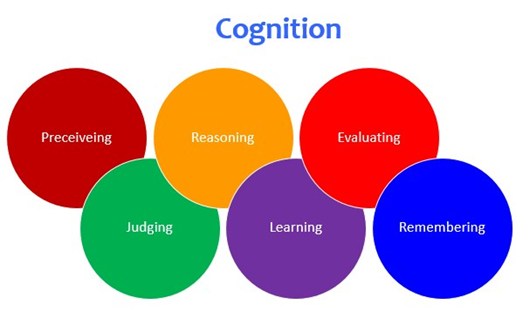
What the term means: Cognition: It is the way of thinking, remembering, learning, daydreaming, decision making, seeing, writing, and talking. So basically, it is the things we do in our daily life.
Reflection on the Topic
1. Cognition has been described in two general modes which are experiential and reflective cognition. They are described as fast and slow thinking by Kahneman. Experiential cognition is described as fast things such as reading a book or driving a car. Reflective cognition involves mental effort or attention. Both of these cognitions are important in our daily life. ” The former is a state of mind in which we perceive, act, and react to events around us intuitively and effortlessly. Reflective cognition and slow thinking involve mental effort, attention, judgement, and decision making” (Preece, Rogers & Sharp, 2015, p. 66).
2. “Cognition is the mental steps you use acquire, process, and understand information. It involves absorbing information, processing it, and then applying it to the appropriate situations” (Cognition and Learning).
3. An example of cognition is could be learning a new language

 My Blogs